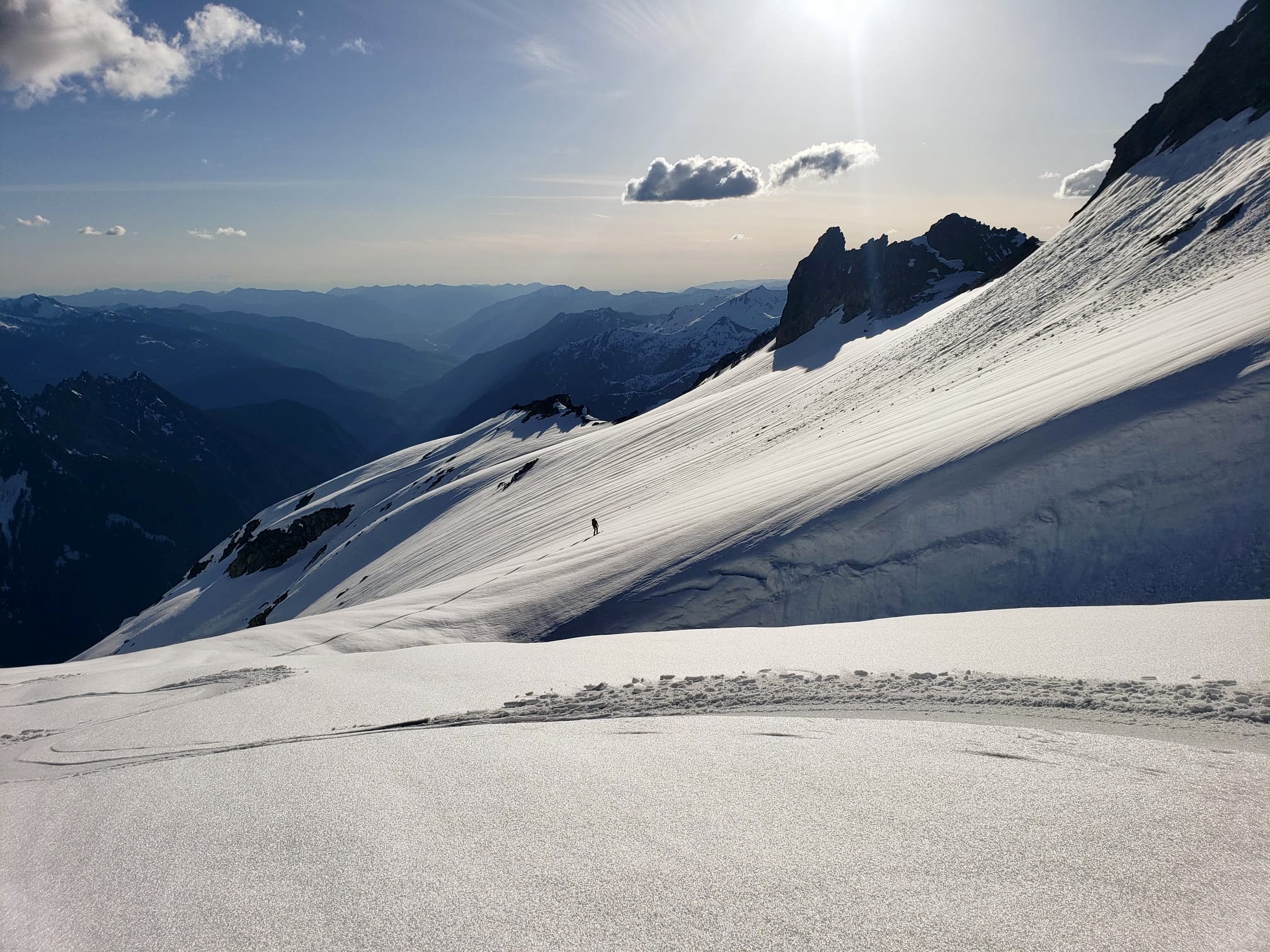
Spring corn snow — smooth, forgiving, noisy, and perfectly carvable — is one of the great pleasures of ski touring. It turns big mountains into playgrounds and rewards patience and timing rather than storm chasing. When everything lines up, it can deliver the kind of skiing that feels almost effortless. Any story of spring skiing will likely involve the storyteller making that special “shwoo” noise when recounting their turns - spring snow is so good that it even sounds fun.
But corn doesn’t happen by accident. It’s the result of a simple but fascinating natural process: the freeze–thaw cycle.
How Corn Snow Forms
During winter, snow crystals are fragile and irregular. They form in storms, settle, break apart, and compact over time. But once spring arrives and temperatures begin to swing above and below freezing, the snowpack starts to transform.
Here’s the basic cycle:
During the day, the sun warms the snow surface and melts the top layer slightly.At night, temperatures drop again and that melted water refreezes.
Over repeated cycles, the snow crystals round off and bond together into small, uniform grains. Instead of fluffy flakes or wind slabs, the surface becomes made of smooth, spherical snow pellets that roll and slide easily under your skis.
That’s corn snow — named because the grains look a bit like kernels of corn.
The result is snow that skis beautifully: supportive, predictable, and almost immune to the grabby, unpredictable feeling of winter crust.
Timing Is Everything
The secret to spring skiing isn’t just knowing where to go — it’s knowing when.
In the morning, the snow surface is usually frozen solid from the overnight refreeze. Early starts often mean firm, fast travel conditions for skinning, but the skiing will feel more like an ice rink than a powder field.
As the sun warms the slope, the top few centimetres soften into that perfect corn texture. The trick is to arrive just as the surface softens but before it turns slushy.
Too early, and the snow is bulletproof.Too late, and you’re ploughing through mashed potatoes.
When you hit the window right, the snow feels like velvet.
Disclaimer : In the pursuit of spring snow, you will ski as much ice and slush as you do corn, but those days when you pick the right route at the right time make it all worth it.
Follow the Sun
One of the most enjoyable parts of spring touring is that the mountains suddenly feel dynamic. Instead of a single objective for the day, you can move with the sun and chase good conditions.
East-facing slopes soften first in the morning.South-facing slopes come into their prime late morning.West-facing terrain often skis best in the afternoon.
Experienced tourers plan their routes accordingly, moving across aspects as the day unfolds. It turns a ski tour into a kind of solar-powered scavenger hunt — always searching for that next perfect descent.
Mapping tools (Outmap, anyone?) that show slope aspect and terrain orientation can make this planning much easier, especially when you’re trying to visualize how sunlight will move across a mountain.
The Importance of the Overnight Freeze
All of this magic depends on one critical ingredient: a solid overnight freeze.
If temperatures stay warm overnight, the snowpack never refreezes properly. Without that reset, the surface quickly becomes wet and unstable the next day. Skiing quality drops off, and avalanche hazards can increase — particularly wet loose slides.
A good rule of thumb is simple:If the snow didn’t freeze overnight, the skiing probably won’t be great.
Check the temperature trends and be honest about what the snowpack likely did overnight. Spring rewards patience.
Spring’s Quiet Advantages
Beyond the snow quality, spring skiing has other perks.
Longer daylight hours mean less rushing. Weather patterns often settle into clearer, more predictable cycles. The snowpack is usually deeper and more consolidated, opening up bigger lines and longer traverses.
And there’s something deeply satisfying about climbing through crisp morning air, knowing that the mountain is slowly warming up just in time for your descent.
It’s skiing that feels less like chasing storms and more like working in rhythm with the mountain.
Why Many Skiers Prefer It
Powder skiing is thrilling, but it’s also chaotic. Storms, wind, and unstable snowpacks often make winter touring unpredictable.
Spring skiing, by contrast, rewards observation and timing. When you learn to read the freeze–thaw cycle, understand slope aspect, and move with the sun, the mountains start to feel more predictable.
And when you drop into a wide alpine face covered in perfectly softened corn, linking smooth, effortless turns all the way to the valley floor, it becomes clear why many experienced backcountry skiers quietly wait all winter for spring.
Because sometimes the best snow of the year doesn’t fall from the sky.
It transforms.