Most people treat summer and winter as totally separate worlds. Hiking in one, skiing in the other. But if you start paying attention in summer, you’ll realise you’re basically getting a cheat code for winter.
Because in winter, you’re never seeing the full picture.
Snow simplifies everything. It fills in gaps, smooths out features, and makes terrain look way more friendly than it really is. A clean-looking face might actually be broken up by cliffs. A mellow slope might have a bunch of convex rolls — exactly where avalanches like to start. You’re often making decisions based on a slightly blurred version of reality.
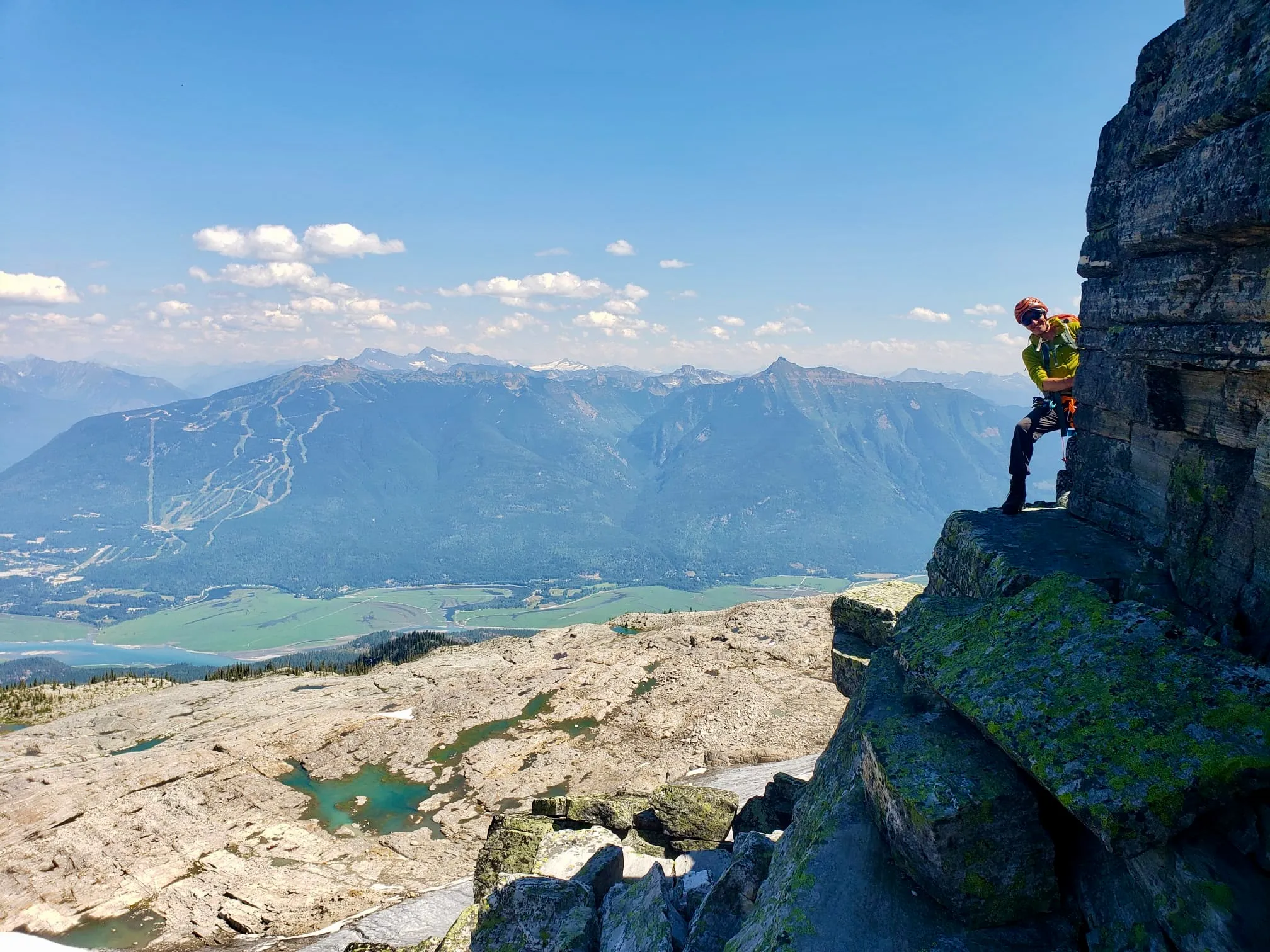
In summer, there’s no blur. You see the mountain properly.
You start to notice how everything connects. Not just “that goes up” or “that goes down,” but how terrain actually flows. Where ridges naturally guide you. Where slopes steepen without warning. Where little benches give you places to stop and reset. These are the things that quietly control how your day goes in winter.
Take ridgelines. In winter, they’re often the go-to for safe travel — good visibility, less overhead hazard, usually a nicer gradient. In summer, you can just walk one and immediately understand why. You’ll see how they avoid steeper slopes, how they give you options on either side, how they naturally keep you out of trouble. Once you’ve felt that, it’s way easier to spot good ridge routes on a map later.
Gullies are the opposite story. In summer, they can feel like shortcuts — direct, efficient, kind of obvious. But spend a bit of time in one and you’ll notice how everything funnels into the same place. Loose rock, water, debris — it all ends up there. Translate that into winter and you’ve got a terrain trap. The same place that felt like an easy route suddenly becomes somewhere you really don’t want to be.
And then there are cliffs. Winter does a great job of hiding them. Or at least softening them enough that you convince yourself things “probably go.” In summer, there’s no pretending. You see exactly where things stop. You see the breaks, the weaknesses, the lines that actually work. And once you’ve seen that once, it sticks.
That’s the real value of summer — you start building a memory of the terrain.
So when you come back in winter, you’re not just reacting to what’s in front of you. You’re recognising things. You’ve seen that face before. You know roughly where it rolls over. You’ve got a sense of where you can move safely and where you might get stuck.
It’s a completely different level of confidence.
This is also where maps start to click in a different way. If you’ve ever looked at contour lines and thought, “Yeah, I kind of get it,” summer is when that turns into, “Oh, I really get it.” You can look at a map, then look at the terrain, and connect the two. You start to understand what a tight contour actually feels like under your feet, or what a subtle ridge looks like in real life.
Tools with proper 3D mapping help a lot here too. Being able to spin the terrain, tilt it, and compare it to what you’re seeing in front of you builds that mental model way faster.
The other big advantage? You can mess up.
Route-finding errors in summer usually just cost you time and maybe a bit of pride. You take a wrong turn, hit a cliff band, backtrack, try again. No big deal. In winter, the same mistake can be a lot more consequential. So every small mistake you make in summer is basically free learning.
By the time winter rolls around, the mountains don’t feel like a blank canvas anymore. They feel familiar. Like you’ve already had a look behind the curtain.
And that’s when things start to flow a bit more. You move more efficiently. You hesitate less. You make better calls without overthinking them.
Because you’re not just looking at snow. You’re seeing the terrain underneath.
So yeah — summer might not feel like ski season.
But if you use it right, it’s probably the most valuable ski prep you can do.
Because the snow changes.
The terrain doesn’t.