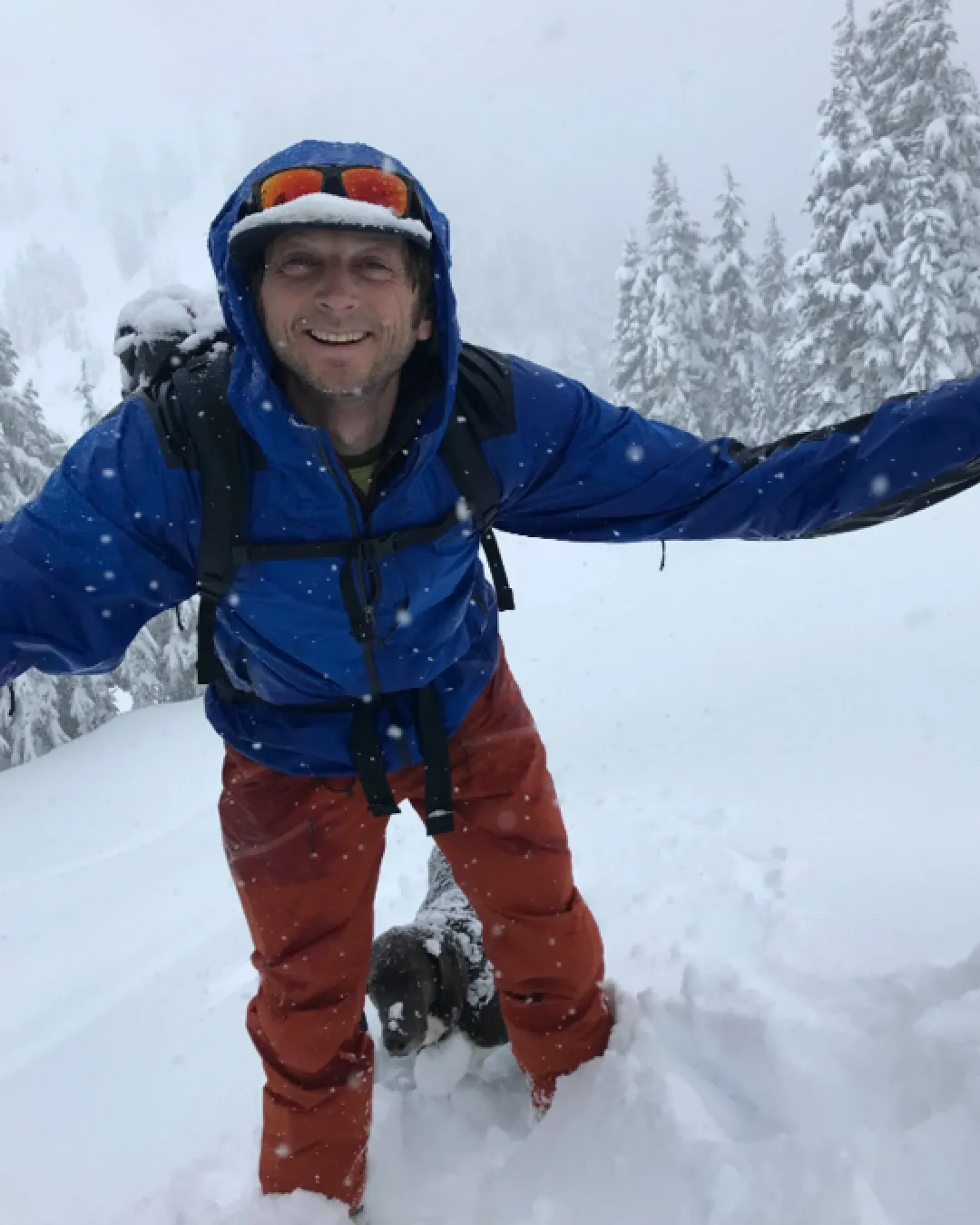
Our first guest is IFMGA Mountain Guide Evan Stephens, owner of Zenith Mountain Guides in Squamish, BC, and a passionate climber and skier. From avalanche forecasting to owning a ski lodge and, now, running a successful guiding business, it's been a life and a career built on passion for the mountains.
Key Takeaways & Insights
Evan says US backcountry avalanche forecasting is mostly fieldwork, but has under 50 jobs.
Evan started as an intern at the Utah Avalanche Center at 22. He puts field time against office time at 'at least a 60/40 split'. You do not get rich, he says, but it is a decent life.
Evan earned his IFMGA licence in 2 years, against Canada's typical 5 to 7.
To guide in Canada Evan had to be a certified guide. He did the apprentice-level programmes in year 1 and the full programmes in year 2, with about 5 years of operational backcountry skiing behind him.
Guiding's hard part is managing people and systems, not climbing or skiing, Evan says.
In Evan's view, nothing replaces experience: he calls 100 days a year for 6 years 'trial by fire'. Many ski clients ski well but lack the experience or comfort to make high-level decisions, and he calls himself 'a risk manager and a high-level decision maker.'
Evan co-ran a backcountry ski lodge in the Valhalla Mountains for about 12 years.
Evan ran it with his first wife. Doing it all without outsourcing, from guiding to fixing frozen plumbing, was 'not super sustainable', he says. It worked only because the work was seasonal: by about April 1st he could take a 6-week holiday. Leaving for full-time winters in Squamish was 'the best thing to rejuvenate my career.'
With 3 million people next door, Squamish guiding is year-round, Evan says.
Squamish, nicknamed Squamonix, has the Chief 5 minutes away, with 1,000-foot rock routes, and the Tantalus Range for skiing. Revelstoke and Golden are less year-round. During COVID it stayed busy as Vancouver skiers took day trips.
Evan credits his client base to loving the work, and urges finding a mentor.
Of his client base and name, Evan says it 'all comes from me just being so in love with what I'm doing'. He calls a plumber's or electrician's job with a 4-day week and 3 days to play 'not a bad option either.'
Complete podcast transcript
Hello and welcome along to episode one of the brand new Outmap podcast, A Guide In Life, presented by me, Charlie Boscoe, Outmap's head of content and a lifelong mountain addict. We've called the show A Guide In Life because that's just what backcountry sports are for us, focal points which shape our choices of where and how to live.
0:31 Here at Outmap, we have some fascinating partners, colleagues, and ambassadors, and we want to tell their stories, partly because hearing interesting people tell great stories is fun, but also to try and extract how and why people made the choices they did to end up with the lives they lead.
0:50 We'll be bringing you a new episode every two weeks, and we'll be talking to mountain guides, professional athletes, ski patrollers, YouTube influencers, you name it. If they've made a life doing what they love in the mountains, we want to hear their story. It should be fascinating, fun, and hopefully there might be some learning and inspiration to be had along the way, which might help you make the right decisions as you follow your own passion in the mountains.
1:18 So sit back and enjoy the drive, the ride, the hike, whatever you're doing, and let's get on with it. Our first guest is IFMGA mountain guide, Evan Stevens, originally from the States, but now the owner of Zenith Mountain Guides in Squamish, BC. His list of personal and professional achievements is remarkable, including being an avalanche forecaster in Utah, owning a ski lodge in the Valhalla range, and a ton of high-level climbing and skiing, both with clients and personally.
1:56 You can find out more about him or book a day with him at zenithguides.ca. Evan's been passionate about mountain sports his whole life, and as you'll hear, that passion is showing no sign of waning. Evan, welcome along. Where are you joining us from today?
All right. Good morning. I'm in Squamish, BC.
Oh, nice. Nice. And we're just entering your... I guess, is winter the busiest season for you or summer these days?
Well, most of the time, winter is the busiest. Summer's gotten busier for me over the years, but as I tell folks now, I played a lot in my 20s and 30s, and I'm saving for my retirement in my 40s and 50s.
Yeah, I think a few of us are going through that process. Yeah, for sure. This podcast really is about figuring out how people made cool lives in the mountains, because I think a lot of people, including myself, leave university or school or whatever they did, and they think, "Yeah, I don't want a job. I wanna do something cool."
3:06 That's fine for a while, and you bum around, like I did, I'm sure you did, with ski bum jobs. I was driving airport in Chamonix But it's tricky to then turn that into a real life where you Disposable income and a house and a family and all the things that come, as you go through life.
3:28 So it'd be interesting to know where your journey into the mountains and a life working in the mountains began.
Yeah. No, I'm pretty fortunate. Right out of university, I had all intentions and aspirations of being nothing but a ski bum for a few years with that or as long as I could maintain it. You know, growing up with the Scot Schmidt posters on the wall and all that stuff, I just dreamed of having that life of skiing in these wild places. And you know, I did an undergrad degree. I did a cool project with mapping and cartography, doing, avalanche hazard mapping using GIS, geographic information systems.
4:16 And that was just a cool way to spend my time, and I did get my degree and all that. But it turns out, there was places that weren't trying interested in fiddling with some of that stuff, and one of those was the Utah Avalanche Center.
4:30 And so they hired me on as an intern. So, I wasn't making big money, but right out of university, 22 years old, here I was out in Utah, all over the State, Central and Southern Utah and Wasatch. And I got to just all of a sudden have this job. It was an internship year one.
4:50 But I got this job following around the legends of, you know, the avalanche world in the US. Bruce Tremper, Tom Kimbrough, Drew Hardesty was just starting up at the same time as me. Evelyn Lees. Just a, just unbelievable. And so the here I was, more into a real winter career, right at a young age.
5:14 And I just did all this just learning hands-on by following around these legends in the field. Over the next few years, that internship turned into a full-time avalanche forecasting position for the Utah Avalanche Center and the US Forest Service. So for me, being like 25, having this job, not, gone through the rigors and the paces, like being in working ski patrol and throwing bombs at ski areas or doing whatever else. I somehow, through academics, lucked into, to finding a niche and a groove.
5:51 And so yeah, no, I just kinda carved a little bit of a career out of that, and it was great. Did a bunch of those winters in Utah. At the same time, that was a winter job, and so I had a real winter job right away there with the government. And I was like, "Okay," kinda skipped out the ski bum years, and so turned it into this backcountry ski touring job, like, right away, which was unbelievable.
6:20 In the summers I needed some work. I was always a climber too, so I just started doing, a lot of guiding, in the Pacific Northwest and everywhere else. And so I just started doing rock guiding, alpine guiding, a little bit of everything.
6:33 So I was just on this nice path as a summer guiding and avalanche forecaster, and maybe I was gonna be a climbing ranger or something. Who knows? But I don't know, that worked for a bunch of years, and it was in a little happy place there in Utah.
Yeah, that sounds pretty idyllic. Presumably a lot of people just stick with forecasting permanently. It's a lifelong career
100%. You look at everyone else around there, and they'd taken it. The pinnacle to some people is this cush government job. Not necessarily cush, you don't make the big money. But at 25 I could've done my 30 years and had a pension at 55, and
7:12 And happily marched along. And, no, it totally works like that. And most people probably wouldn't have moved on from that job, landing in that time.
Is it generally a job for life? People who get into forecasting, they stick with it.
I think for a lot of those, in the US, those avalanche jobs, the Forest Service avalanche jobs, people tend to stick around for a long time. Job turnover used to not happen as much. I think it happens maybe a little bit more now. Every pair of people move around avalanche centers or wherever else, but it's a pretty good gig. Hey, government tax dollar's paying you to go ski touring and then talk about it.
7:55 Talk about it in a forecast or whatever it is. It's not so bad. Like I said, you don't get rich, but it's a decent life.
If someone's listening to this and they think that was something they'd like to do, what is the reality of being a forecaster? Is it... I guess you do have, you do your fair share of digging.
It,
Like, it's a physical job, right?
That was the beauty of the job is, I'm not a desk jockey. I can't. I'd just lose it if I'm sitting here at the computer too much or too many days in a row. I'm a hands-on, active, be-in-the-field kinda person.
8:32 And so yeah, it's at least a 60/40 split of field time, office time, or maybe even more, eh, depending on where you are. In the US that's what it's like. It's pretty It's like a mostly field-based job, and that's the draw of it, right? Some of us just aren't made to sit here behind the computer or whatever else. And you progress long enough, you move into management, and next thing you know you're just punching a keyboard. But at the same time, you
8:58 And it's like, can you be happy with well enough, and stick with something? So it's a really good career choice for those getting in there. But again, in the US, the backcountry avalanche forecasting jobs, they got a number under 50 in the US, so it's a pretty limited job.
9:18 But yeah, no, it's a good one. I would do it again in a second for sure if it was in the right place, the right time, but yeah.
The move into summer guiding. How did that come about? You said it was a logical fit, 'cause you'd been climbing a long time. But guiding is a bit of a chicken and egg industry in that you need the experience to get the job, but you can't get the job without the experience.
9:44 How did you get into guiding?
I started climbing in high school. I started skiing from a super young age. But the thing, skiing is almost like it wasn't, didn't burn out on it in my 20s, but climbing was more, was newer, flashier, and more exciting and more progression at that age too, so that progression really fuels you and engages us.
10:12 And skiing, the progression curve was slower than it was in climbing. But I'd followed it with a passion, and the beauty of the seasonal jobs is in the winter I was a skier and in the summer I was a climber, and you could just live that dichotomy easily, and they didn't conflict with each other. I love how they're mutually exclusive so to speak, 'cause you can do both and give them their seasons. I love seasons.
10:41 But for me, one of my early summer jobs during school and everything was just taking kids top roping and teaching them to climb and stuff. And so then it just went hand-in-hand with the progression of just, like, being hungrier for taking people up bigger things and wilder places and wilder things.
11:00 And I was doing my summers, a ski season would end. I'd do a bunch of weeks in the Utah desert climbing around there. Then I'd go to Yosemite for a bunch of weeks. Then I'd go north, 'cause it got too hot, and then come up to the Pacific Northwest, and that's where I was teaching kids top roping and climbing stuff in the Pacific Northwest, around here, Washington and British Columbia.
11:24 And so then I just took that progression from teaching the kids climbing to then getting involved with out bigger, bigger guiding and climbing, and that had been the American Alpine Institute back 20, 25 years ago. They're based in Bellingham. So I started there down in the States. And then, while that all happened, I had met, my first wife in Squamish, who's Canadian.
11:48 And so then I was like, "All right, I gotta, gotta move to Canada, I guess." And so then everything kinda came to a head there, where it was just like, "Well, I'm not gonna be in Utah anymore. I'm gonna come up to Canada. If I wanna guide in Canada, gotta be a certified guide." And so then I dove into the guiding, guide training and certification. And so, you know, I started doing all that at the same time, and then just hammered through and got My IFMGA license, my badge there, so I could come up.
12:15 That was still American only then, and then immigrated up, you know, to Canada here and came here with my IFMGA ticket, so.
I feel you're glossing over a lot, 'cause for a long time I was guiding and chasing the Ticket and I know you're glossing over a lot by saying, "No, I just got my ticket." It's a huge deal to get that, right? I mean, what was that process like?
Yeah, no, it's another whole school, right? And so the thing I find fortunate with them guiding has become my whole life then, so I transitioned from just, like, you know, avalanche forecasting and climbing to just the whole mountain guiding thing. It encompasses everything I do now. It all my jobs and career and everything now.
13:03 But it's one of these things where I was this passionate backcountry skier with a really unique, at that young age, in my mid-20s, I have like five years of operational backcountry skiing experience with avalanche gurus. And then at that early age too, I'd done a bunch of seasons, like, in the US you can just start guiding. You have a couple weeks of training and you get thrown into the fire, right? It's not like you gotta
13:31 And at the same time, I was following climbing passionately, right? And so I was 23 years old, 24 years old, I'd climbed El Cap a ton of times. I'd done mixed alpine routes in Alaska, done big walls in Greenland. So it's just like in my early 20s, the crew I fell in line with, we were just charging and getting after it.
13:56 Ice climbing hard, doing all the things. And so for me, a little bit of guiding and then feeling like my skiing and my climbing were all at top recreational levels they could be. It's not that the guiding process is a challenge and it's hard, but it was also just like I dove into it in an ENSA style, which doesn't happen as much here in North America, where I just did everything in two years.
14:28 And so it was like every season was a program, and so it was like, okay, year one, it was all the apprentice level rock alpine ski programs. Year two, all my full programs done. It had its challenges, but there's a lot of advantages to diving into it like that and not just like, in Canada it's typically five to seven years people take to complete the pin.
14:53 Fair enough, but a lot of people, they're not as much an alpine climber, not as much a skier, so the struggle is there in between things. But I was just on target.
And I think, yeah, I feel a bit uncomfortable expressing opinions about the guiding industry to you, but in my opinion, I think if you wanna get into guiding, the best thing you can do is just go climbing and skiing. And I met tons of people, and they were going on courses, and they
Wow
Shadowing people and spending, unpaid summers at an outdoor center following people around. And I always just thought, if I'm gonna go ski touring with someone I've never met, and they say, "I've done six weeks of avalanche courses," and then the other person says, "I've got six years of going ski touring 100 days of winter," I want the person-- I don't care if they have no formal education. If you've kept yourself alive and had 100 of winter, of figuring out how to move
15:54 That, you're gonna be so competent. Anyone ever asked me about when I got into guiding or being a lower level than you, I always just said, just go climbing." 'Cause firstly, you get really Technically, and secondly, you meet people.
Amen.
And you meet someone, and they'll say, "Hey, actually there's a company looking for unqualified people. They'll give you 100 euros a week," or whatever it is when I was in France, and you're on your way. And so, yeah, I think, Just going climbing and skiing is the best thing you can do in guiding.
Amen. You should never be in any of those programs. And the climbing, the skiing, that's the easy part, and
That's the fun bit
That's the fun bit. That's the easy part. The hard bit is managing the people and the technical systems and the application of the right systems, and that's where all of your focus and your energy should be lying in those problem-solving and decision-making times. But moving through the mountains, that's the stuff you have on lockdown when you get to the guide program, and that's what the experience gives you, right? And that's what trial by fire of 100 days a year, six years, you just learn and you
17:09 And you feel and you experience and that really, there's no replacement for that. Honestly, take it or leave it or debunked or not, but the whole 10,000 hours thing to get a mastery of certain topics. Yep, there's a lot to that. And you can't replace that. Like those hours of just subtleties and the nuances and the, you know. I'm still learning every time I go out there, and it's still, there's no limit to it. Yeah, the learning curve, you know, lessens again a little bit, but it's still, you're still seeing new things and experiencing new things every day.
Yeah, for sure. I remember going out with really experienced people and thinking, "God, when they transition on this kind of icy pass that we're standing on, they don't really look like they're gonna drop their skis, whereas I do." And they ever seem to get cold hands, and they're never hungry, and they're never and it's like, and they're just doing all this stuff, getting themselves, keeping themselves
18:12 Eating, drinking at the right time, and they're just hovering. They're hovering along on an even keel all day, whereas I'm Exhausted, then I'm super hungry, then I'm too full 'cause I my whole sandwich. And it's all this subtlety, isn't it, that You pick up just from doing it.
Tons of that. So yeah, no.
How did you feel about guiding itself? 'Cause again, I met a lot of people that were becoming mountain guides basically 'cause they like going climbing and skiing. But did you instantly like the actual guiding of looking after someone and your own enjoyment of the day a little?
No, that's a great, question. It's like it's almost a means to an end at the beginning. And what I mean by that is it was good paying seasonal work, and it kept me outside and kept me moving or whatever else. But in the early days, I was fortunate that I had a lot of winter work, and so I could work less in the summers, which means I could climb as much as I wanted to in the summers and not work a lot. And that was like 20s and 30s.
19:18 And I didn't want a climbing guide or even, I got into doing the guide training programs and instruction at an early age too, probably like 30 or 31, I started doing the guide training programs. And I never wanted to work any of the rock programs in the summer because they were during climbing season, and I didn't wanna go climb moderate routes forever. I wanted to go climb harder, so I was an elitist for sure.
19:44 And so I used it like that. But for me, it quickly came about with ski guiding and the niche, not a niche I carved myself, but more just like a, the place there was space for was just delivering like really high quality ski guiding product.
20:09 I just love it. And I was just passionate about skiing the best things I can at any time, in the whatever was appropriate for the conditions, and doing as much as people wanted to do. And somehow I fell in line with a bunch of clients and guests who were keen to just keep going, and I'd do these weeks of week upon week of ski touring, of doing like 2,000 meter vertical days after day. And it was just people were hungry for it and just get out and craving it.
20:41 And so it was like, wow, my ski guiding quickly became very quickly, and it still is to this day, I go out and guide what I would do on my own personally, recreationally, like 95% of it. Yeah, sometimes I wanna go ski maybe some more ski mountaineering oriented or something like that. But to be honest, at this point, I've carved out the clientele for that too, where I still can do those things if I choose to take that risk on.
21:09 As I get older, my appetite for that is definitely decreasing. But that was the beauty about ski guiding was that I'm getting paid to take these people on these amazing adventures, and it's exactly what I'd be doing if I was here with my friends anyway. And all these clients are fit and strong, and they're my friends anyway too. And so it was just amazing. Like alpinism and the rock climbing and that kind of stuff, definitely like ski guiding, you get clients, a lot more clients who are really good skiers and can be really fit, but they just don't have the experience or comfort making those high-level decisions.
21:50 And that's really what I am, is a risk manager and a high-level decision maker. Climbing, it's more the people, like skiers can ski. There's so many skiers that can ski like 5.13 or 5.12. But climbers, there's hardly any clients that'll wanna climb that. And if they are, it's very rare and few and far between. And if they've made it to that level, then they're just off on their own doing their own thing, right? So, yeah.
I'm just trying to figure out why that might be. I guess to this is awful to 'cause I'm more of a skier than a climber. But I've done, done a ton of climbing. It's harder to get really good at climbing, I think, than to get pretty good at skiing.
22:41 Like climbing 5.12 is harder than being a ripper in powder.
It's true. You can get so much repetition and exposure to skiing and ski hills and whatever else. You can be in those places and do those hard things. It's gravity fed, so it's the same
It's not as physically arduous.
Yeah. No, mountain biking would be similar in that context too, right? You can go to a bike park and get the repetition, but like climbing, it's just harder to be stronger and to be better at the technical and the exposure and the systems and all that. So it's like if you've progressed to that point in climbing of climbing 5.11, then 5.12 or whatever, then everything else has to evolve with that naturally.
23:24 Whereas skiing, you can get that technical ability, and you don't have to evolve your decision making and your snow science and everything else, right? Climbing, they have to work together. You have to learn your systems, unless you're a boulder, right? But then you're not hiring a guide or doing anything anyway.
23:44 Yeah.
So how did your career then evolve? You get your pin. You're an IFMGA mountain guide. You're in that kind of elite club. What was your next move from there? 'Cause I guess it's a career, isn't it? You don't
Well, yeah. So, I
You know. Yeah
Well, yeah. So at that time, that first wife I met, her parents, owned and operated a backcountry ski lodge, in British Columbia in the Valhalla Mountains. And we were young, and right away after we got together and right as I was in the middle of finishing my guide training stuff, they were like, "We're going to Mexico for the winter. Run the business for the winter." So we're like, "Okay." And my first wife had grown up with that stuff and been at the lodge and everything.
24:38 But here it was. They gave us the keys. We're running this lodge. It was like half self-guided and half like visiting guides that came through. And so here it was, got to drive a snowcat, run chainsaws, keep the backcountry laws water systems, do the works, plus daily snow science, and then I was an aspirant guide at that point, and then I got that whole winter I got to follow around a bunch of full mountain guides and full ski guides and see them through the winter. And so we just ran all that, trial by fire.
25:10 And then subsequently after that our parents had run the business for a bit, and they were just excited to start handing off some responsibilities. So for the next 12 years, we took that over and ran that, and so that was the source of what most of the winter work.
25:27 So it was being owner/operator of the lodge, ski guiding all winter long, changing snowcat wheels, fixing frozen plumbing, like you name it. Doing a little bit of everything in this remote backcountry lodge setting. So that was pretty fun, and it built up the client base, and started to do clients for other trips and other adventures.
25:52 So like I said, did that for like 12 years, and that whole time too had gotten into, teaching and instructing, the guide training program and the AMGA, 'cause I went through the US program, and then subsequently I started doing it as well in the Canadian system too.
26:08 Yeah, and did that, you know, till we had parted ways, me and my first wife. And then, when we did that, I sold out of my shares of the business. We were already part-time in Squamish and then the winters at this lodge.
26:24 And I just went full-time year-round in Squamish and just dove headfirst into doing all the guiding stuff around here for the last 10 years now. And it was great. Valhallas are amazing. It was a great experience, but smaller mountains. Not small, but not huge, complex glaciated things, just like classic fun powder skiing.
26:46 And so it was nice to then shift gears, and I'd always do like spring seasons and other times of year on the coast. But it's nice to just be full tilt on the coast and just exploring out here and getting into the bigger mountains and the wilder places, and so career just kept evolving from there.
Yeah, just going back to that lodge, what's that experience really like? I've been into a few fly-in lodges. I definitely don't get to the end of the week and wanna go home. I wanna stay and just keep doing it. Is that a classic example of guiding's not always just ripping powder? There's actually a lot of grunt involved in that kinda lifestyle, right?
Well, yeah, in that lifestyle. At that time it was like, you know, we were both just like climbing bums, ski bums. We just work hard. We didn't outsource anything. We did everything ourselves. And so, you're just like, you're just trying to cut every corner and save every dollar, and value prices have increased to the point now where it's more you can outsource a little more and hire some more people than ever else. But back then you're not generating as much revenue like 15, 20 years ago, right?
28:06 So you're gonna try and do everything you can yourself. And so I was doing all the guiding. We're chopping all the firewood and driving the transfers on the snowcat. You're doing sleds. You're maintaining the facilities, like doing all those things 'cause you just wanna save a couple bucks here and there.
28:24 It's not super sustainable. The only reason it's sustainable is 'cause it's seasonal in nature, so you could get to like April 1st and just be like, "All right. Done." Take a six-week holiday.
Yeah, yeah. Did it slightly detract from your enjoyment of the skiing though? 'Cause you must have been just, you must have been Every morning.
You definitely get to that point, and if the skiing's good, the job is easy, but we all know it's not amazing all the time. Luckily in the interior of British Columbia it's good most of the time, but then you get some rain event or it hasn't snowed in two weeks or whatever, and you're just like, "Nah." You get a little bit of the doldrums. But quickly you realize, you're like, "No, no, no, no, no, no. I'm not cleaning outhouses for a living here. I'm still getting to go skiing. Even if it's like a mediocre day of skiing, I'm still just out walking in the mountains."
29:24 It doesn't last long, that feeling.
Yeah. Yeah. No, I get that. Beats having a real job. And so when you moved to Squamish, what's the guiding industry like there?
Oh, Squamish? Yeah, yeah
How developed is the guiding industry? How year-round is it feasible?
Oh, yeah. So, you think about where are the major guiding epicenters in Canada. Squamish, Whistler would be one of them. Revelstoke, Golden, Canmore, Banff. Revelstoke and Golden aren't gonna give you as much of the year-round. Squamish is as year-round as it gets, and so is Canmore. Banff is as year-round as it gets. Like we jokingly have nicknamed, years ago Squamish we nicknamed Squamonix, 'cause it's as close as you get in some ways to that whole experience. You've got like the Chief is five minutes away, and you're climbing 1,000-foot rock routes.
30:19 You got Tantalus Range mountains, epic coast ski range. Mountain biking's extreme here, whatever you wanna call it. People are base jumping off the Chief all the time. So it's an adventure sports capital without a doubt, but at the same time too, it's next to 3 million people, right?
Yeah.
And That is a huge ingredient. So you have the same Banff, Canmore is the same. You have this globally recognized national park system out there, and you got Calgary, a million plus people. So whether we hate crowds, but the reality of it is You get year-round good employment when you're next to a big city, an international destination. So it's grown a lot and all these activities are more and more popular and it's just even looking at COVID times, for example, COVID was still a busy seasons because there's, still 3 million people that wanna go get out ski touring in Vancouver, and they're not traveling 'cause they're all doing things from home.
31:28 So they're not traveling to the interior of BC and staying in lodges, but they'll go on day trips around here. So it was fine.
And you're not as young as you were. How do you view your future guiding? Do you think that guiding has a lifespan for you? I look at someone like Ruedi Beglinger. It just, you know, People might think about him, God, the guy looks after himself and he's still going.
32:00 Is that something you aspire to as you age, do you see that there are ways to transition away from basically having to make a living through a physical job?
Yeah, I wanna stay active in doing these things in the physical nature as much as possible because when you stop doing it gets harder to do it all the time and harder to get restarted. So it's impossible for me to be as strong as I once was, not too long ago with a kid and other things going on, but at the same time you asked me before about is it a means to an end of doing guiding and everything else? But now it's like, oh, I just love getting out summer, winter, whatever activity it's doing and I'm like, yeah, I'm not climbing 5.12 in the summer, but I'm doing miles at 5.9 and 5.10 and I'm on the rock and then still going ski touring and skiing powder all the time and so it's keeping me this great general fitness, and marching along and I see myself doing this for as long as I possibly can.
33:04 I'm definitely proactive about some of the shifts. It's inevitable if you stay in this and if you have any kind of aptitude or proclivity towards being a leader or a manager or something like that, you'll end up in one of those roles and so of course I end up in some of these roles.
33:22 And so you take on more things that keep you in front of the computer screen a little bit more or doing a little bit more management so it makes it more sustainable, but you get paid more accordingly for it and it makes it so it's more of a, a not traditional job but making it more toward that as you can, so to speak, so you do have more longevity with it.
Where do you think, that passion comes from? 'Cause if you total up how many days you've been climbing and it'd be a few. Do you have any idea where your enthusiasm comes from for that, where that passion comes from. I remember Mark Twight saying he had an empty cup. No matter what he poured into his cup, it just still felt empty, still felt like he wanted more.
Hmm.
Why do you think that is?
My wife's convinced I'm some degree of ADHD or something which I wouldn't be too blown away by. And so it's like, can you think of something that's more, engaging than any of these activities we do, you know, on a physical and mental level?
34:38 Doing all these things like nothing focuses me and drives me and clears my head more than going climbing or going ski touring or whatever else, right? Just that having the heart racing and then also having your mind going to do all this micro and macro decision-making all the time that's the best and it just satisfies me on so many levels.
35:06 If you do one and not the other, like, oh, do some challenging office tasks or management or whatever it is, then I don't have the physical nature and a changing and dynamic environment to adapt to and mitigate risk of all the time. It's just like it's flat. It's like one-dimensional.
35:26 So I just crave the multidimensional all all-encompassing aspects of so many of these activities.
It's amazing. It's just so endlessly stimulating 'cause it's never quite the same.
No. Do the same tour 20 times and it's different every time. And you just keep exploring and it's that's that passion for new places, new things, new experiences, like every day you do something that's different. It's one of those things, like for so many years of the original backcountry ski lodge I was at, I did tons of exploration and looked around all the corners and we're here with Outmap stuff, but I've always been addicted to maps and I just explore the maps all the time and find all these little nooks and crannies and whatever else.
36:13 But then I also got to a point there where it was like, yeah, I could have stayed in that job and done that forever, but I was also just a little like meh with it too 'cause I'd done so much in this one confined area. And so it was also the best thing to rejuvenate my career was just moving on from that lodge and doing my winters full-time in Squamish 'cause now all of a sudden it's like, okay, here I am in Squamish. I got my own two feet, I have snowmobiles, I have helicopters, and I have this entire dynamic, huge, massive, impressive coast range to explore now too.
36:43 So it was just like, whoosh, a whole new world of challenges to change and to be in and explore.
I love that. I know we're conscious of time, but just, As someone who's lived a life that you're clearly very passionate about, it's clearly fulfilled you professionally and personally, what would you say to someone listening to this who's 22, fresh out of whatever, ski bumming around?
I'm just fortunate to be able to make a living off of things I'm passionate about. And if you can do that, it's like, what a great way to move through life. None of my jobs are burdensome or chores or just like, oh, to go to work. Every job has those days where it feels like that, right?
37:50 But whenever I get into that or feel like that, and then all of a sudden I'm walking up the skin track or stepping out of a helicopter and you're just like, "Yeah." Like, "Come on, man." So, super fortunate that I can blend those things, my passion, and have it be a good career. And it just keeps you from burning out on it.
38:14 And it's super fulfilling. And I think too is that we have our little family here and raising our daughter and I want to live with that example of my daughter seeing, you know, me having a fulfilling career that helps support our family
38:30 And I am following my passions and doing what it's like, right? And that was my parents growing up, they were just like as long as I was happy, and they were supportive of what I was doing, and I think that's important just to be able to follow those things and do what you can to have that kind of economic freedom or whatever it is, or if you're fortunate to have that lot in life to be able to explore that a little bit. Because if you are passionate about what you're doing and what you're following, that shines through to everyone you're with, and that'll help you rise above in whatever it is you're doing, and you can be better off in there, right?
39:12 So the client base that I developed or the name I have for myself and being able to work and do these things all comes from me just being so in love with what I'm doing for work and play and having that passion and that stoke, and it's obvious to everyone that I'm with, and it just keeps fueling itself along with everybody else and that just builds momentum and keeps it going.
39:40 So the more you can do that and be driven for it, the better off you can be. So.
And people can feel that.
100%. Yeah.
I've seen lots of people working in Chamonix and yeah, if the guide looks like they'd rather be somewhere else, no one's having a good time.
No. Yeah
I think that's great to hear. I think it's so important to love it, hey.
You got to. There's a lot of things you can do in life and don't get me wrong, the other option too is just like, hey man, go be a plumber, an electrician, and work hard and make good money, and AI's not gonna replace your job. And then have money and financial freedom, and you work a four-day work week and then go play three days a week too, right? That's not a bad option either.
40:28 And it's great for a lot of people because this isn't necessarily, like being a guide and doing these things is hard and there's a lot of stress and fatigue, decision fatigue and stuff too to make those things happen, and it is hard to sustain that. But at the same time, do what you can do to live that life with a bit of passion in it and fire for following some dreams.
I love it. I love it. Hey, Evan, I really appreciate your time. It's super interesting to hear all about it and yeah, hopefully someone listening to this thinks, "Yeah, you know what? Maybe I should do that."
Yeah, totally. And I'd say just the other part too is just find a mentor. Find someone that inspires you and latch on too. And that's so important in our mountain pursuits or professional lives or whatever it is to just have a little bit of that person to look up to and have some guidance to get along, to get where you're going.
Well, if someone wants to look up to you where can they track you down?
We're at Zenith Guides, Zenith Mountain Guides. You can just Google Zenith Guides in Squamish and then we'll pop right up there. And then, we do all sorts of fun courses and ski touring and climbing and everything else there. And, then we've got our good newsletter for the snow conditions that's free to follow along if people are keen to. So that kinda aims at helping there with giving people a little insight to what's going on in the snow and the weather and where to go skiing in the mountains. That can be hard to come by from some circles. So we're happy to help the community with that stuff too.
42:05 So, yeah.
Nice. Well, I hope, you've actually got some snow to slide on soon and we can replace this gray sky with a bit of blue and a bit of On the ground. That'd be nice. But yeah, appreciate your time. And yeah, thanks for the inspiration.
Yeah, no worries. Feels like we could chat for hours.
Sure does. Thanks so much.
Yeah, no worries.
So thank you to Evan for his time and inspiration. If you enjoyed this episode and you'd like to hear more, tune back in a couple of weeks. But in the meantime, do us a favor, hit Subscribe, tell your friends about it, spread the word. If we have more people listening, we can bring you more podcasts, more guests. It's a win-win for everyone. So do us a quick favor, hit that Subscribe button and we'll speak in a couple of weeks. Thanks for listening.